Why Self-Study Feels Productive but Goes Nowhere When Learning Hungarian
Many people who start learning Hungarian choose to study on their own. Self-study is convenient, flexible, and allows learners to go at their own pace. At first, it feels incredibly productive: you finish lessons, memorize vocabulary, and complete exercises.
But after a few weeks or months, the results often plateau. You realize that despite all your effort, your Hungarian skills aren’t improving as quickly as you expected. Why does self-study feel productive but go nowhere when learning Hungarian?
Hungarian Is a Complex Language
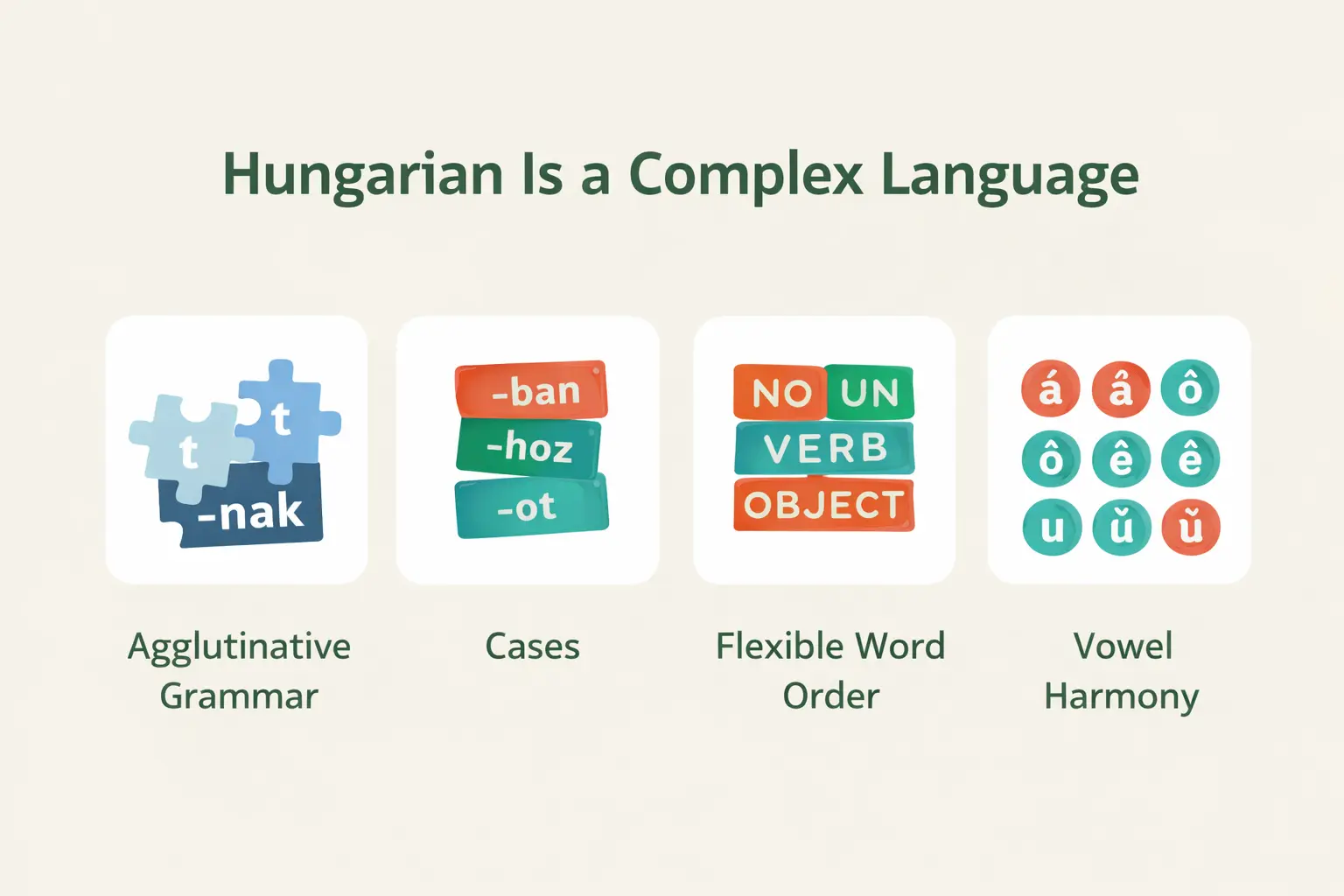
One key reason self-study often fails is that Hungarian is very different from most other European languages. It features:
Agglutinative grammar with long suffixes
Over a dozen grammatical cases
Flexible word order
Pronunciation and vowel harmony rules
When learners study alone, it’s easy to memorize words or rules without fully understanding how they connect in real sentences. Self-study materials often oversimplify Hungarian, which creates the illusion of progress.
Hungarian has several unique language features that make self-study more difficult without guidance.
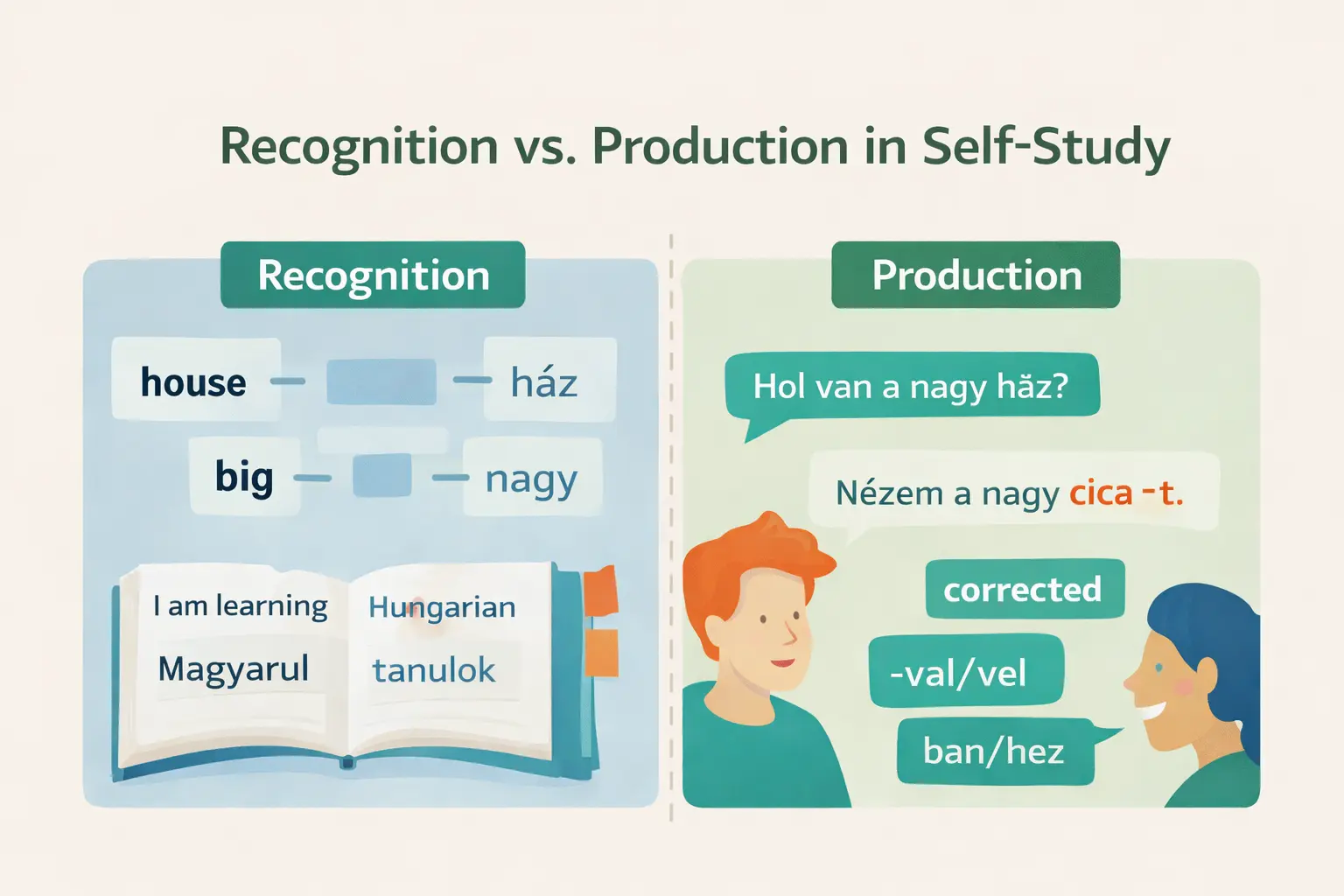
Recognition vs. Production in Self-Study
Self-study often focuses on recognition tasks:
Translating sentences
Matching words
Memorizing vocabulary lists
These exercises make learners feel productive because they can answer questions correctly. However, recognition is not the same as production. In Hungarian, producing sentences requires actively combining words and suffixes, understanding case endings, and applying grammar rules in context.
Without practicing production, self-study may boost confidence but not real-world skills.
Understanding Hungarian words on paper is very different from being able to use them correctly in real conversation.
Grammar Without Context Leads to Stagnation
Hungarian grammar is highly context-dependent.
For example:
Verb conjugations change based on whether the object is definite or indefinite
Word endings depend on vowel harmony
Meaning often shifts depending on word order
Self-study materials often present grammar rules in isolation. Learners may understand a rule theoretically but struggle to apply it in conversation. Over time, this creates a sense of “learning without progress.”
Vocabulary Gaps in Self-Study
Vocabulary memorization is common in self-study, but Hungarian words are challenging to retain because of:
Complex word forms and suffixes
Low similarity to English words
Multiple variations depending on context
Without hearing words in natural speech or practicing them in sentences, vocabulary often fails to stick, and learners feel stuck despite daily study.
Lack of Speaking and Feedback
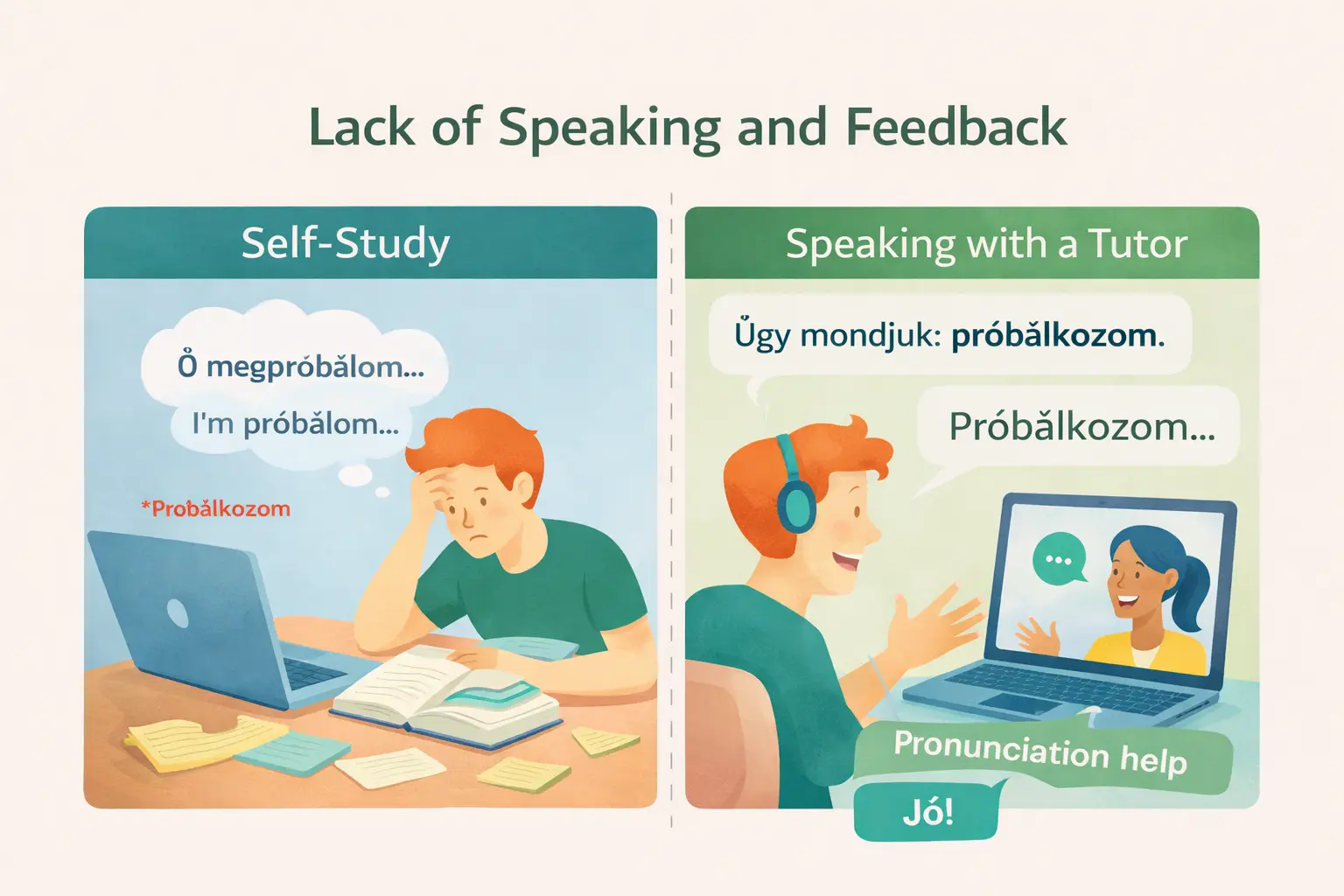
Self-study rarely provides opportunities for real conversation or feedback. Pronunciation, sentence rhythm, and fluency are critical in Hungarian.
Without feedback:
Mistakes go uncorrected
Bad habits form
Confidence declines
Even if self-study feels productive, the lack of speaking practice prevents meaningful progress.
Without speaking practice and feedback, self-study learners often repeat mistakes without realising it.
Motivation Can Be Misleading
Self-study often uses checklists, apps, or flashcards to track progress. These tools create a sense of accomplishment. However, progress metrics in self-study rarely reflect actual ability to use Hungarian in real-life situations.
When learners attempt conversations or reading Hungarian texts, they may feel frustrated that they “know the rules but can’t use the language,” which can lead to burnout.
How to Make Self-Study Effective for Hungarian
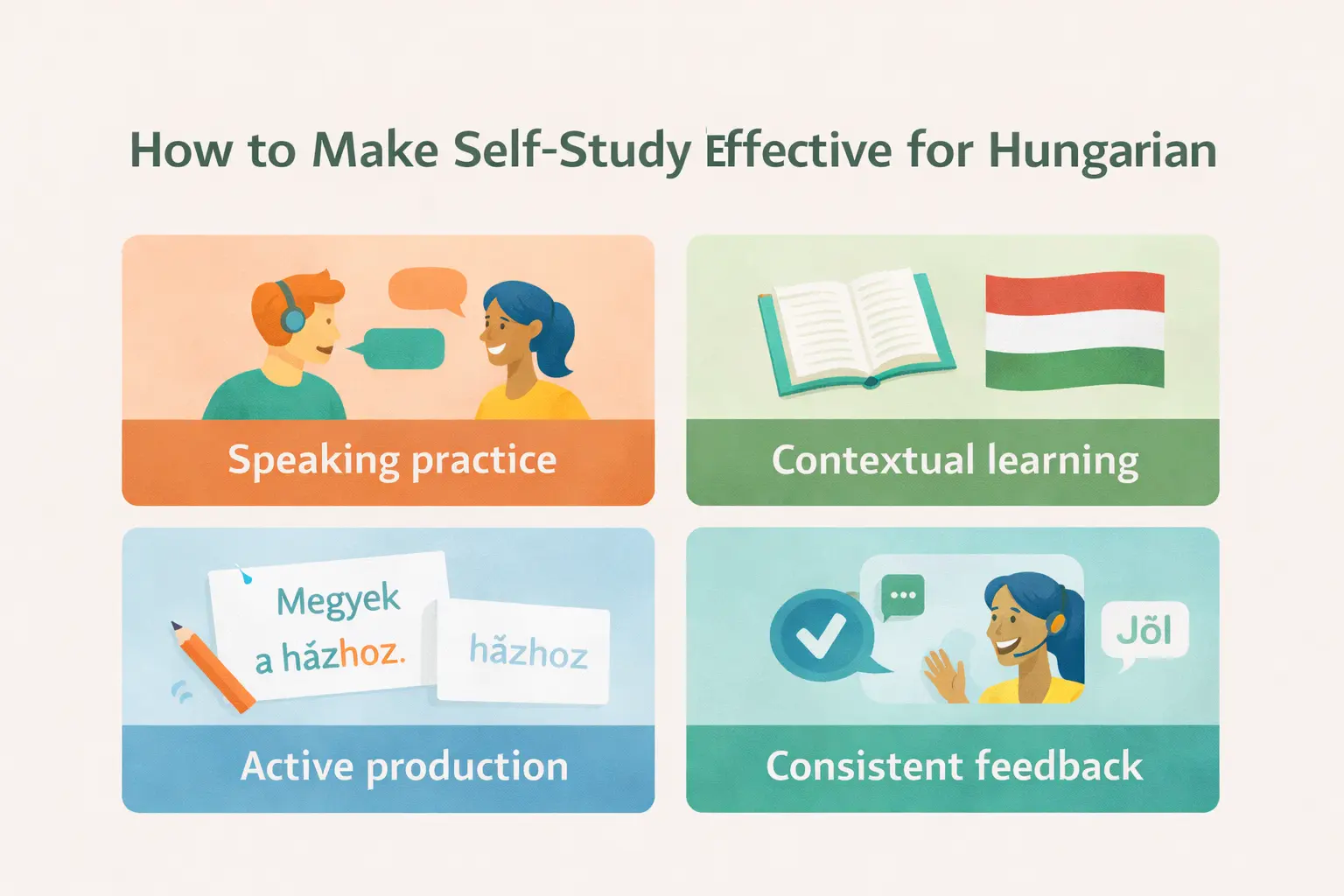
To turn self-study into real progress, learners need to supplement it with:
Speaking practice: Conversations with native speakers or language partners
Contextual learning: Using vocabulary and grammar in real situations
Active production: Writing and speaking sentences instead of just recognizing them
Consistent feedback: Correcting mistakes early to avoid fossilizing errors
Combining self-study with these strategies ensures that productivity translates into measurable Hungarian skills.
Self-study works better when it includes speaking, real context, active use of the language, and regular correction.
Stop Feeling Productive, Start Learning Hungarian
Self-study for Hungarian often feels productive because learners can complete exercises and track progress easily. But without speaking practice, contextual usage, and feedback, self-study alone rarely leads to fluency.
To make meaningful progress in Hungarian, focus on active production, real-world context, and interaction, not just passive study. Productivity feels good—but progress lasts longer when learning Hungarian actively and meaningfully.
Free Hungarian Alphabet Flashcards to Kickstart Your Learning
New to Hungarian and feeling overwhelmed by the alphabet? Don’t worry! My free downloadable Hungarian ABC Flashcards are perfect for beginners. Each card focuses on a letter with examples, helping you quickly grasp the basics. Use them alongside your lessons to build a strong foundation and advance confidently!
Learn Hungarian with More Free Flashcards
Our free flashcards help you build your Hungarian vocabulary one topic at a time. Each set includes pictures, English translations, and audio pronunciation. Whether you’re learning words for school, food, holidays, or nature, these cards make it easier to remember and use Hungarian in real life. Perfect for beginners and intermediate learners.
Stay tuned for updates, learning resources, interactive sessions, and much more. If you have questions, goals, or would like guidance on your learning journey, feel free to reach out.
Let’s embrace the challenge and beauty of learning Hungarian, together.
About Your Hungarian Instructor
My name is Magdolna, and I am your dedicated native Hungarian instructor. Growing up in Hungary, I have absorbed the language, culture, idioms, and subtle nuances that make the Hungarian language truly special. Teaching my native tongue is incredibly rewarding. I believe language is a bridge between cultures and a pathway to new opportunities.
My mission is to help you experience Hungarian in a way that becomes a seamless part of your thought process. Our classes will transcend mere lessons. They’ll be a rich cultural exchange, ensuring your progress, success, and enjoyment.