
Is Learning Hungarian Worth the Money for Your Goals?

When you think about learning a new language, one of the first practical questions that comes to mind is: Is it really worth the money? This is especially true for Hungarian—a language often described as fascinating, complex, and unlike most others in Europe.
Unlike widely spoken languages such as English or Spanish, Hungarian is not a “default choice.” It is rarely learned casually. So if you are considering investing in Hungarian lessons, courses, or study materials, it’s important to take a step back and evaluate whether this investment aligns with your personal goals.
The short answer?
It can absolutely be worth it—but only if your reasons are clear and meaningful.
Let’s explore this in more depth.
1. Start With Your Goal: What Do You Want From Hungarian?
The value of learning Hungarian depends almost entirely on why you want to learn it. Without a clear purpose, even the best course can feel like a waste of money.
Here are some of the most common motivations:
Citizenship or Simplified Naturalisation
For many learners, Hungarian is not a hobby—it’s a requirement. If your goal is to obtain Hungarian citizenship, language skills are essential. In this case, your investment has a very concrete outcome. You are not just learning a language; you are opening the door to legal status, mobility, and long-term opportunities within the European Union.
Living in Hungary
If you plan to live in Hungary, even basic Hungarian can significantly improve your daily life. While many people speak English in larger cities, everyday situations—doctor visits, administration, local services—often require Hungarian. Investing in the language means investing in independence and confidence.
Work and Business
Hungarian is a niche language in the global market, but that’s exactly what can make it valuable. In certain industries or companies, Hungarian skills can set you apart. If your work involves Hungarian partners or clients, even intermediate language skills can strengthen trust and communication.
Family, Heritage, and Relationships
For those with Hungarian roots or Hungarian-speaking partners, the motivation is often deeply personal. Language is a bridge—not just to communication, but to culture, identity, and belonging. In these cases, the emotional return on investment is often higher than any financial calculation.
Intellectual Challenge and Personal Growth
Hungarian belongs to the Finno-Ugric language family, which makes it structurally very different from most Indo-European languages. If you enjoy linguistic challenges, Hungarian offers a unique and rewarding experience. For some learners, this alone justifies the investment.
2. What Are You Actually Paying For?
When you invest in learning Hungarian, you’re not just paying for lessons—you’re paying for a system of support and progress.
Typical costs may include:
- Private lessons (often the fastest and most tailored option)
- Group courses (more affordable, but less personalised)
- Online platforms and subscriptions
- Textbooks, workbooks, and audio materials
- Your own time and energy (often the biggest hidden cost)
Hungarian is not a language you “pick up” quickly. Its grammar, vocabulary, and structure require consistent effort. This means your financial investment is closely tied to your commitment level. Even the best course will not deliver results without regular practice.
3. Measuring the Return on Investment (ROI)
With languages like English or Spanish, the return on investment is obvious: global communication, travel, and career opportunities. Hungarian, however, offers a more targeted return.
High ROI situations include:
- Successfully passing a citizenship interview
- Navigating life in Hungary with confidence
- Building stronger personal and family relationships
- Accessing local job markets or niche professional roles
Lower ROI situations include:
- Learning “just in case” without a clear plan
- Expecting global usefulness comparable to major world languages
- Studying inconsistently or without practical application
In other words, Hungarian pays off best when it is directly connected to your life.
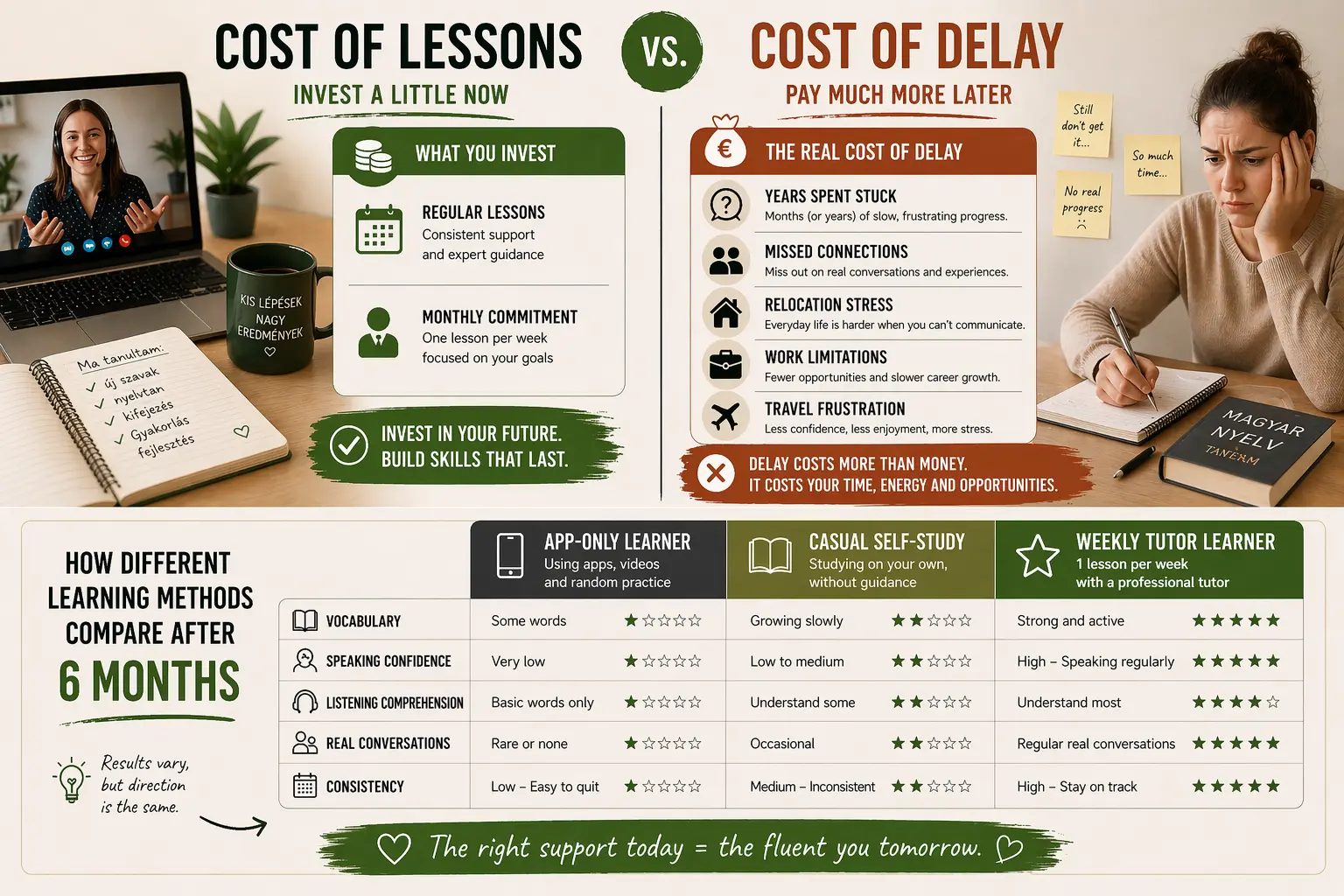
4. The Emotional and Cultural Return
Not all value can be measured in money.
Learning Hungarian gives you access to:
- A rich cultural heritage, including literature, music, and traditions
- A deeper understanding of how Hungarians think and communicate
- Everyday interactions that go beyond “tourist level”
- A strong sense of achievement—because Hungarian is genuinely challenging
Many learners report that the moment they can hold their first real conversation, understand a joke, or manage a situation entirely in Hungarian feels incredibly rewarding. These moments are difficult to quantify, but they are often what make the journey worthwhile.
5. The Reality Check: Challenges You Should Expect
To make an informed decision, it’s important to be realistic.
Hungarian is known for:
- Complex grammar (cases, verb conjugations, word order)
- Vocabulary that is largely unfamiliar to speakers of Indo-European languages
- A slower learning curve compared to more “accessible” languages
This doesn’t mean it’s impossible—it simply means it requires patience and consistency. If you are looking for quick results, Hungarian may feel frustrating. But if you are prepared for a long-term investment, the rewards can be significant.
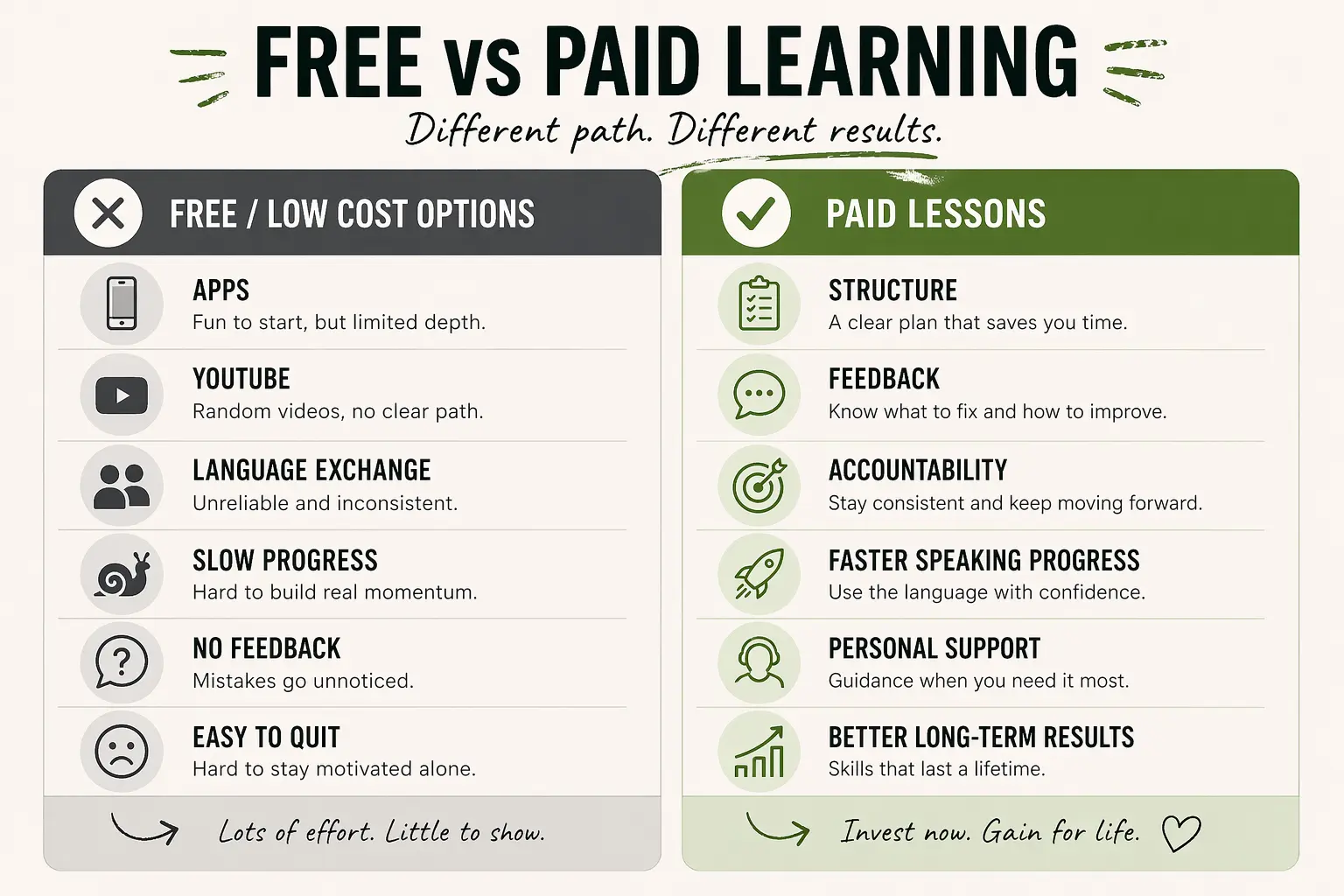
6. How to Make Your Investment Worth It
If you decide to learn Hungarian, there are ways to maximise your return:
Set clear goals
Instead of “I want to learn Hungarian,” define something concrete:
“I want to introduce myself and talk about my family in 3 months.”
Choose the right format
Private lessons are ideal for specific goals (e.g., citizenship), while group courses can work well for motivation and structure.
Focus on practical language
Prioritise real-life communication over perfect grammar, especially in the beginning.
Be consistent
Short, regular study sessions are far more effective than occasional intensive learning.
Work with experienced teachers
A good teacher can save you time, frustration, and money by guiding you efficiently.
7. So… Is It Worth It?
Learning Hungarian is not a casual investment. It requires time, money, and dedication. But its value is highly personal.
It is worth it if:
- You have a clear, meaningful goal
- Hungarian plays a role in your life plans
- You are ready to commit to the process
It may not be worth it if:
- You are unsure why you are learning it
- You expect quick or easy results
- You are looking for a globally “useful” language
Hungarian Can Give You More Than Just a Language
Hungarian is not just a language—it’s an experience. It challenges you, stretches your thinking, and connects you to a unique cultural world.
Whether it is worth the money depends entirely on what you want it to give you in return.
If your goals and your motivation are strong, Hungarian can be one of the most rewarding investments you ever make.
And if you’re still unsure?
Start small. A few lessons can quickly show you whether this path feels right—before you fully commit.
Sometimes, the real value isn’t in the decision itself, but in giving yourself the chance to explore it.
Free Hungarian Alphabet Flashcards to Kickstart Your Learning
New to Hungarian and feeling overwhelmed by the alphabet? Don’t worry! My free downloadable Hungarian ABC Flashcards are perfect for beginners. Each card focuses on a letter with examples, helping you quickly grasp the basics. Use them alongside your lessons to build a strong foundation and advance confidently!

Learn Hungarian with More Free Flashcards
Our free flashcards help you build your Hungarian vocabulary one topic at a time. Each set includes pictures, English translations, and audio pronunciation. Whether you’re learning words for school, food, holidays, or nature, these cards make it easier to remember and use Hungarian in real life. Perfect for beginners and intermediate learners.


Start Your Hungarian Learning Journey Today
Stay tuned for updates, learning resources, interactive sessions, and much more.
If you have questions, goals, or would like guidance on your learning journey, feel free to reach out.
Let’s embrace the challenge and beauty of learning Hungarian, together.

About Your Hungarian Instructor
My name is Magdolna, and I am your dedicated native Hungarian instructor. Growing up in Hungary, I have absorbed the language, culture, idioms, and subtle nuances that make the Hungarian language truly special. Teaching my native tongue is incredibly rewarding. I believe language is a bridge between cultures and a pathway to new opportunities.
My mission is to help you experience Hungarian in a way that becomes a seamless part of your thought process. Our classes will transcend mere lessons. They’ll be a rich cultural exchange, ensuring your progress, success, and enjoyment.
Book your free briefing call now to learn Hungarian!