- Living in Hungary
Your First 30 Days in Hungary Without Speaking Hungarian
A practical, week-by-week plan for the situations you are most likely to face – from the airport to the pharmacy, the shop counter and the government office.

Magdolna
28 August 2026 · Budapest

Your first month is less about fluency and more about knowing what to say, and where.
01
Build a language safety net before you fly
02
Learn phrases by situation, not by textbook order
03
Know where you will genuinely need help
Prefer personal guidance?
Tell me where you are starting from and what you want Hungarian for.
Moving to Hungary without speaking Hungarian can make your first few weeks feel more complicated than expected.
You may be able to use English at the airport, in hotels and in parts of Budapest. Daily life can be different. A visit to a pharmacy, government office, local shop or medical reception may require at least some Hungarian.
You do not need to become fluent during your first month. You need a practical plan, a few reliable phrases and a clear idea of where you may need help.
Before you arrive, read Moving to Hungary: What to Plan Before You Arrive for help with accommodation, documents, appointments and settling-in preparations.
This guide takes you through the situations you are likely to face during your first 30 days in Hungary.
The short answer
Fluency is not the goal in month one. A written safety net, ten dependable phrases and a plan for the appointments that really matter will carry you further than an app ever will.
Before you arrive: prepare your language safety net
Do not rely entirely on mobile translation after you arrive.
Your phone may run out of power, your internet connection may fail or the translation may not match the situation.
Create a short note containing:
- Your full name and Hungarian address
- Your landlord or local contact’s details
- Your medical conditions and allergies
- The names of any medication you take
- Your embassy or consulate’s contact details
- Hungary’s emergency number, 112
- A few essential Hungarian phrases
Keep the information on your phone and carry a printed copy.
The European emergency number 112 is free and connects you with the ambulance service, police or fire brigade. It can be called from a mobile or landline at any time. Save it before you arrive. You can check the current guidance on the Hungarian emergency number information page.
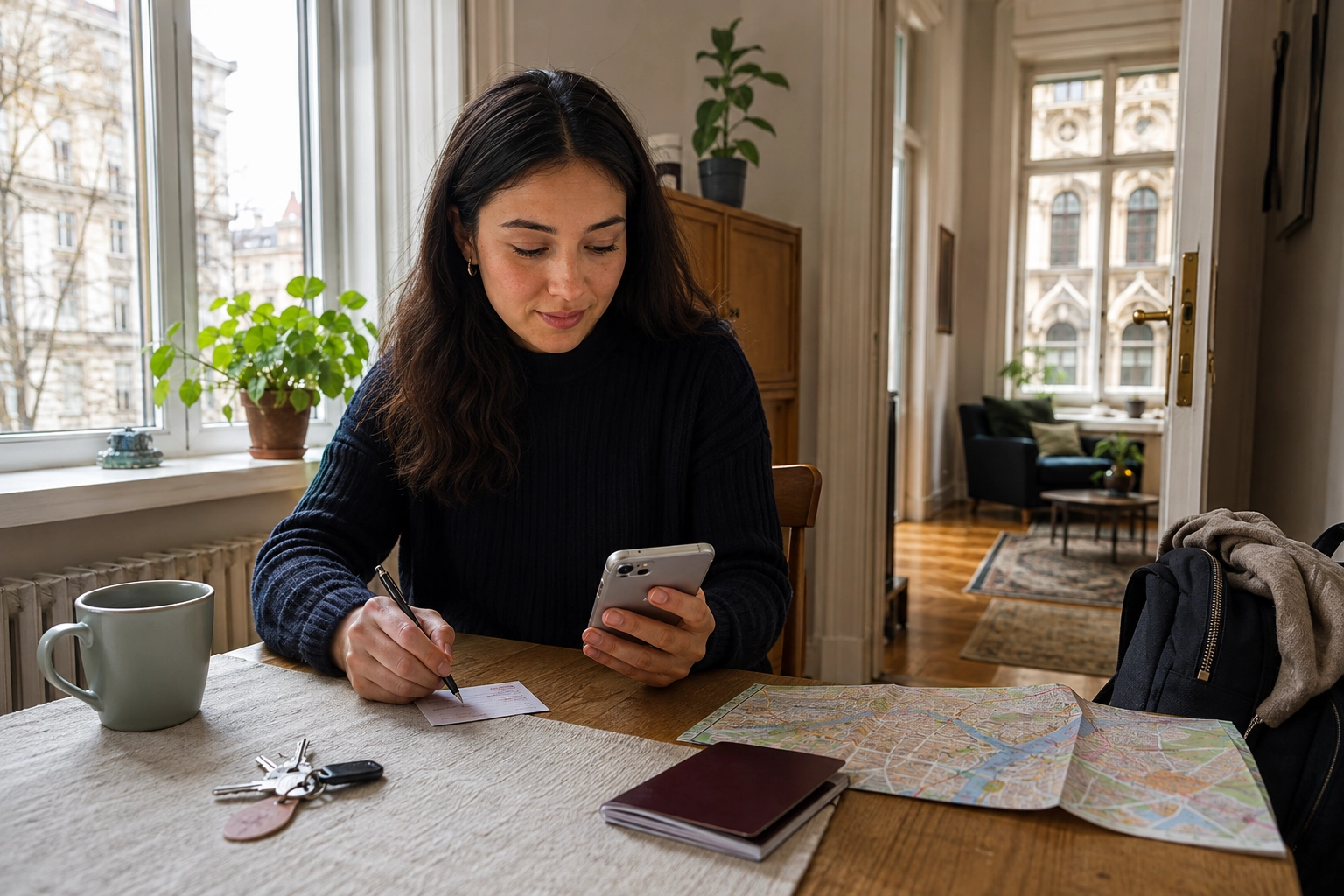
Essential phrases for your first day
Start with phrases that help you explain your situation.
Nem beszélek magyarul.
I do not speak Hungarian.
Csak egy kicsit beszélek magyarul.
I only speak a little Hungarian.
Beszél angolul?
Do you speak English?
Nem értem.
I do not understand.
Kérem, beszéljen lassabban.
Please speak more slowly.
Meg tudná ismételni?
Could you repeat that?
Kérem, írja le.
Please write it down.
Segítségre van szükségem.
I need help.
Köszönöm.
Thank you.
Elnézést.
Excuse me.
Save these phrases where you can reach them quickly. Practise saying them aloud so you can use them without searching for every word.
Days 1 to 3
Arriving and reaching your accommodation
Your first challenge may be getting from the airport or station to your new home.
Keep your address written exactly as it appears on your rental agreement. Hungarian addresses are normally written with the postcode, city, street name and building number. Your address may also include a floor and door number.
Show the complete written address when using a taxi or asking for directions. Do not rely only on your pronunciation of the street name.
Useful phrases include:
Ide szeretnék menni.
I would like to go here.
Ez a helyes cím?
Is this the correct address?
Hol van a taxiállomás?
Where is the taxi rank?
Hol van a buszmegálló?
Where is the bus stop?
Hol van a metró?
Where is the metro?
When you reach your accommodation, make sure you understand:
- How the keys and building entry system work
- Which doorbell belongs to the property
- How to operate the heating and hot water
- Where rubbish and recycling are placed
- Who to contact when something stops working
Ask your landlord or agent to write down important instructions. A translated written message is easier to check later than a fast spoken explanation.
Days 4 to 7
Buying food and household essentials
Supermarkets in larger cities may be manageable without much Hungarian. Product labels, checkout questions and smaller local shops can still cause confusion.
Begin by learning words you will see regularly:
bejárat entrance
kijárat exit
nyitva open
zárva closed
akció special offer
pénztár checkout
készpénz cash
bankkártya bank card
nyugta receipt
Learn how to ask for what you need:
Ezt kérem.
I would like this.
Mennyibe kerül?
How much does it cost?
Kártyával szeretnék fizetni.
I would like to pay by card.
Készpénzzel fizetek.
I am paying with cash.
Kérek egy zacskót.
I would like a bag.
At a staffed counter, you may also need to indicate a quantity:
Kérek fél kiló sajtot.
I would like half a kilogram of cheese.
Kérek két darabot.
I would like two pieces.
Food allergies need particular care. Keep a written Hungarian translation of your allergy and show it when buying food or ordering in a restaurant.

Days 8 to 10
Using public transport
Public transport can become part of your daily routine quickly, particularly in Budapest.
Learn the words that appear on signs and ticket machines:
jegy ticket
bérlet pass
megálló stop
állomás station
bejárat entrance
kijárat exit
átszállás transfer
indulás departure
érkezés arrival
késés delay
Check the ticket and validation rules before travelling. In Budapest, paper tickets must be validated before entering the metro or immediately after boarding other vehicles. The official Budapest transport guidance explains how and when to validate tickets.
Useful transport questions include:
Hol tudok jegyet venni?
Where can I buy a ticket?
Melyik busz megy a városközpontba?
Which bus goes to the city centre?
Ez a busz a pályaudvarra megy?
Does this bus go to the railway station?
Hol kell átszállni?
Where do I need to change?
Hány megálló?
How many stops?
Download your route before leaving home. Save a screenshot showing the stop names in Hungarian. This will help you follow your journey even if your internet connection is unreliable.

Days 11 to 15
Handling medical needs
Medical situations are harder when you cannot explain how you feel.
Before you need help, identify:
- A nearby pharmacy
- A local doctor or clinic
- An English-speaking medical service, when available
- The closest hospital emergency department
- The correct emergency number
The Hungarian word for pharmacy is gyógyszertár. Pharmacies usually display a green cross.
Useful phrases include:
Hol van a legközelebbi gyógyszertár?
Where is the nearest pharmacy?
Orvosra van szükségem.
I need a doctor.
Időpontot szeretnék kérni.
I would like to make an appointment.
Van időpontom.
I have an appointment.
Fáj a fejem.
My head hurts.
Fáj a torkom.
My throat hurts.
Lázas vagyok.
I have a fever.
Allergiás vagyok erre.
I am allergic to this.
Ezt a gyógyszert szedem.
I take this medication.
Carry your identification, insurance details and a written list of your medication. Do not depend on an automatic translation for complex medical instructions. Ask for an interpreter or English-speaking assistance when the information affects your treatment.
Call 112 when you need urgent ambulance, police or fire assistance.
Days 16 to 20
Dealing with administration
Government administration is one of the areas where newcomers are more likely to need language support.
Depending on your circumstances, you may need to handle residence, address, tax, healthcare or identification matters. The exact requirements depend on your nationality and reason for living in Hungary.
You may come across the word kormányablak. This refers to a government service office where different administrative matters are handled.
Before attending an appointment:
- Confirm which office handles your matter
- Check which documents you need
- Take the original documents and copies
- Keep translated copies where required
- Write down the purpose of your visit
- Arrange language help when the matter is complex
Some Hungarian electronic services are available through Ügyfélkapu+ or the DÁP app, but not every page or administrative process is fully available in English. Do not assume that a translated webpage gives you all the legal information you need.
Useful phrases include:
Időpontom van.
I have an appointment.
Ezt az ügyet szeretném intézni.
I would like to handle this matter.
Milyen dokumentumokra van szükségem?
Which documents do I need?
Hol kell aláírni?
Where do I need to sign?
Kérem, írja le, mire van szükség.
Please write down what is needed.
Kaphatok erről másolatot?
Can I receive a copy of this?
Nem értem ezt a dokumentumot.
I do not understand this document.
Do not sign a document you do not understand. Ask for time to review it or get help from a qualified translator, adviser or lawyer when necessary.
Days 21 to 25
Managing services and repairs
During your first month, you may need to arrange internet access, receive a delivery or report a problem at your accommodation.
These conversations can be difficult because they involve dates, addresses, account numbers and technical terms.
Useful phrases include:
Nem működik.
It is not working.
Nincs internet.
There is no internet.
Nincs meleg víz.
There is no hot water.
Nem működik a fűtés.
The heating is not working.
Mikor tudnak kijönni?
When can you come out?
Kérem, küldje el e-mailben.
Please send it by email.
Nem leszek otthon.
I will not be at home.
Otthon leszek.
I will be at home.
Written communication can help when arranging repairs. You can translate the message, check the date and time, and keep a record of what was agreed.
When a contractor or delivery driver calls, ask them to send a text message if you cannot understand the conversation.
Days 26 to 30
Becoming more independent
By the end of your first month, you will probably recognise words that seemed unfamiliar when you arrived.
You may understand the greeting used in your local shop, recognise your stop on the tram or know how to ask for something at a café.
Now begin building Hungarian around your actual routine.
Create a list of situations you faced during the month:
- Which conversations were difficult?
- Which words did you hear repeatedly?
- Where did you need someone else’s help?
- Which tasks will you need to repeat?
- Which phrases would make next month easier?
Use your answers to decide what to learn next.
Someone working in Hungary may need vocabulary for meetings and workplace introductions. A parent may need language for school communication. Someone managing residency matters may need administrative vocabulary. A newcomer living outside Budapest may need more Hungarian for shops, transport and local services.
Your lessons should reflect these real needs.
“The language you need is already around you. It appears on signs, receipts, menus and everyday conversations.”
Ten practical Hungarian phrases to learn first
Keep these ten phrases on your phone and practise them aloud:

Jó napot kívánok.
Good day.

Nem beszélek magyarul.
I do not speak Hungarian.

Beszél angolul?
Do you speak English?

Nem értem.
I do not understand.

Kérem, beszéljen lassabban.
Please speak more slowly.

Meg tudná ismételni?
Could you repeat that?

Hol van…?
Where is…?

Mennyibe kerül?
How much does it cost?

Segítségre van szükségem.
I need help.

Köszönöm szépen.
Thank you very much.
How to practise during your first 30 days
You do not need long study sessions.
Use ten to fifteen minutes each day to practise language connected to something you are about to do.
Before shopping, review food and payment phrases.
Before travelling, review transport words and stop names.
Before an appointment, write down what you need to say.
After a conversation, note the words you did not understand.
Try this daily routine
- Review five useful words
- Say two complete sentences aloud
- Listen to one short Hungarian recording
- Practise one question and its likely answer
- Use one Hungarian phrase during your day
Small amounts of relevant practice can make daily tasks feel less stressful.

Where newcomers may need language help
Consider arranging help for situations involving:
- Immigration and residence matters
- Legal documents
- Rental agreements
- Healthcare and medical instructions
- Tax and employment administration
- Banking contracts
- Insurance policies
- School registration
- Utility agreements
A friend who speaks Hungarian may help with a simple phone call. Official, legal or medical matters may require a professional interpreter or qualified adviser.
A language tutor can prepare you for recurring situations, but should not replace legal, medical or immigration advice.
What can you expect after 30 days?
You will not understand every conversation after one month.
You may still need translation support, especially during appointments and unfamiliar situations. The difference is that common tasks should begin to feel more manageable.
After 30 days of focused practice, you may be able to:
- Greet people politely
- Explain that you speak little or no Hungarian
- Ask whether someone speaks English
- Buy simple items
- Ask for directions
- Use public transport with greater confidence
- Give your address
- Ask someone to repeat information
- Explain a simple problem
- Recognise common signs and service words
This is a useful first step towards handling daily life with less assistance.
Make Hungarian part of your life in Hungary
Living in Hungary gives you regular opportunities to practise.
The language you need is already around you. It appears on signs, receipts, menus, transport announcements and everyday conversations.
Start with the situations that affect your daily life. Learn a few reliable phrases, practise them aloud and add new language as your needs change.
I offer personalised Hungarian lessons for people moving to or already living in Hungary. Your lessons can focus on the conversations you need for shopping, transport, appointments, work and daily communication.
You can view my Hungarian lesson options and pricing or book a free briefing call to discuss the situations you want to handle more confidently.
Quick answers
Can I manage my first month in Hungary with English only?
In parts of Budapest, in hotels and at the airport, often yes. Pharmacies, government offices, local shops and medical receptions may require at least some Hungarian, so a small set of reliable phrases and a written safety net make a real difference.
How many phrases should I learn before I arrive?
Ten is enough to begin. Focus on phrases that explain your situation – that you do not speak Hungarian, that you need something repeated, written down or explained more slowly.
Is translation on my phone good enough?
It helps, but do not rely on it entirely. Your battery may run out, your connection may fail or the translation may not match the situation. Carry a printed copy of your key details and never use automatic translation for complex medical or legal instructions.
What is the emergency number in Hungary?
112. It is free, works from a mobile or landline at any time, and connects you with the ambulance service, police or fire brigade.
STAGE 01
Before arrival
Arrange temporary accommodation, research areas, plan a scouting trip and gather your documents.
STAGE 02
First week
Move in, check the property, learn your immediate area and confirm the appointments that matter.
STAGE 03
First month
Set up services, attend planned appointments and settle into a daily routine.
How much should I practise each day?
Ten to fifteen minutes, connected to something you are about to do. Reviewing payment phrases before you shop is worth more than an hour of unrelated study.

- A local by your side
Language support that starts with your life, not a textbook
Connecting Hungary offers practical, personalised lessons with a native speaker, combining language and cultural understanding so you can feel more confident every day.
- Your life in Hungary, made simple
Ready to make your first month feel manageable?
Bring the situations you are facing. We will build the Hungarian you need around them.
You do not have to work through every decision alone.
Share this post!